
Damage and Failure Modeling of Composite Material Structures Using the Pam-Crash Code
Composite materials are increasingly used in the automotive and aerospace industries due to their low weight and high mechanical performance. However, their failure behavior remains complex to model because several damage mechanisms can occur, including fiber failure, matrix cracking, and shear damage.
PAM-CRASH, based on the explicit finite element method, can simulate composite structures subjected to severe loading conditions such as impacts. One of the main challenges is the mesh-size dependency of numerical results. During crack propagation, the amount of energy dissipated numerically may vary depending on the element size.
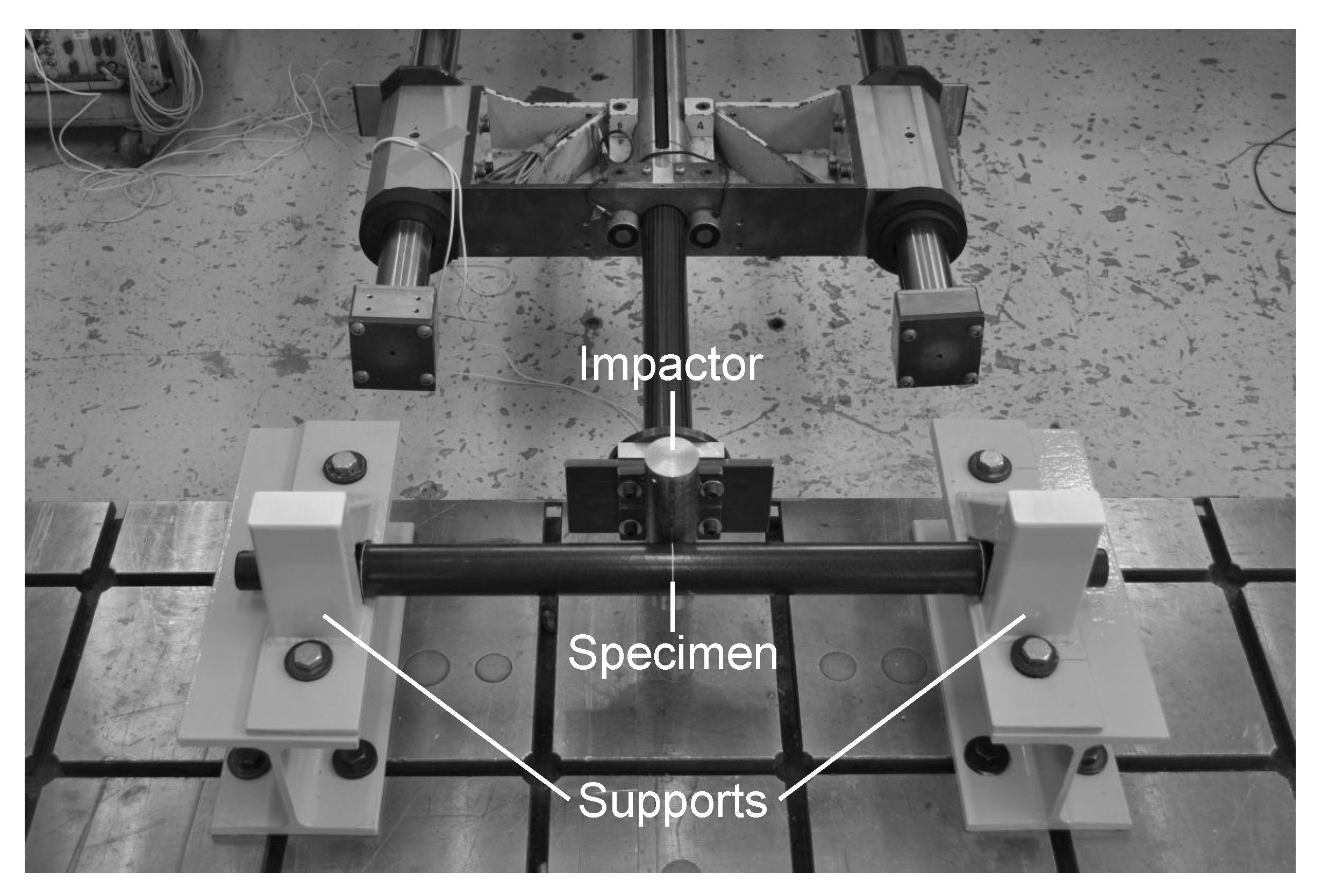
To reduce this dependency, an approach based on fracture energy and the crack band model can be used. The damage parameters are adjusted according to a characteristic length related to the finite element size. The fracture energy can be expressed as:
[G_f \approx L_c \int \sigma,d\varepsilon]
where (G_f) is the fracture energy and (L_c) is the characteristic element length.
The methodology is validated at different scales. Open-Hole tests are used to evaluate the strength of the composite in the presence of stress concentrations, while Compact Tension tests are used to investigate crack propagation. The approach is then applied to larger composite structures subjected to low-velocity impact.
The results show that adapting the material model to the mesh size improves the stability and reliability of numerical simulations. Therefore, this methodology provides an effective approach for predicting damage and failure in composite structures using PAM-CRASH while maintaining computational costs suitable for industrial applications.
Reference: Martin-Santos, E., Barbu, L. G., & Cruz, P. (2024). Damage and Failure Modeling of Composite Material Structures Using the Pam-Crash Code. Mathematics, 12(23), 3847.